

Dog’s Mind — Dog Training
Why Doesn’t My Dog Listen to Me? Dog Training Mistakes
Communication with a dog is not built through a command, a treat, or a role. It is built when a person understands what truly matters to their dog.
A few years ago, I was fortunate enough to live beside a beautiful little park. It was always the first image with which I wanted to begin my day—a few minutes of illusion that I was far from the grey reality of the concrete city. One morning, a new figure appeared in that picture: an elderly man sitting on a bench, with his small dog beside him.
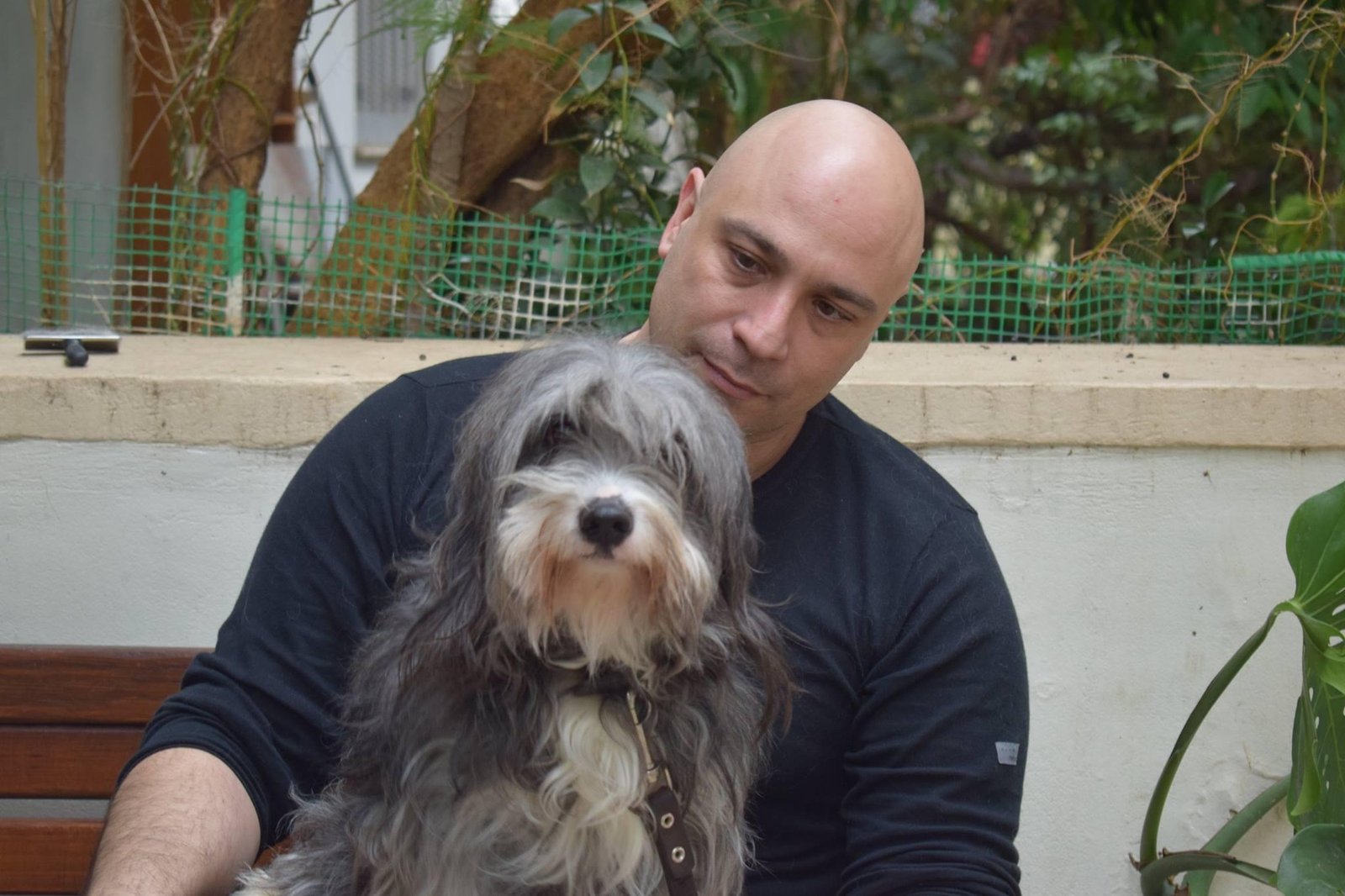
A few metres in front of them, dog guardians were playing with their four-legged friends. The scene made me wonder why the old man’s dog showed no desire to leave the bench. Everything around him was tempting: balls, running, excitement and joy.
Although five floors separated us, it was clear that no leash connected them. Curiosity got the better of me, and I went downstairs to discover what kept the dog from surrendering to such powerful stimuli. Was it fear?
The sight was magical, and I apologise because I still cannot find the words to express what I felt, even though I would love to share that feeling with you.
There was no sign of fear in the posture of the clearly young dog. On the contrary, both faces seemed to carry a smile. The dog was not resisting what he saw. Staying there was a clear, effortless choice.
Their eyes followed every movement around them, and the dog’s nose traced each scent carried by the breeze. Yet they remained still, side by side. I heard no command, and the dog asked for absolutely nothing.
I sat on another bench, and suddenly that man became something immense within me. I had never seen such calmness and such natural ease. At least an hour passed while I imagined the story of their life together and pretended to be occupied with my phone. For the first time, the man turned toward the dog as though addressing him, but said nothing. The little dog jumped to the ground. The man rose as well, and they probably began their journey home—leaving me behind on the bench.
If You Do Not Understand, You Cannot Train Your Dog
As we begin the journey of dog training, we must be prepared to avoid a series of mistakes. Dogs are more intelligent than some people believe. They know when a tactic is artificial, they associate particular places and people with patterns of behavior, and they can easily play the role of the good student simply to earn a good grade. Through standardised training methods, many guardians develop the impression that communication with their dog has reached a very high level.
When they test that communication under real-life conditions, however, they are disappointed to see the dog taking more interest in everything happening around him than in following their instruction. Before I explain what you should avoid while applying the exercises in the articles that follow, we must clarify one question.
Why Doesn’t My Dog Listen to Me?
To understand why this happens, we need to realise that dogs, like humans, constantly rank the stimuli they receive from their environment.
What matters to a dog, and what does not?
Genetic predisposition forms the axis of this hierarchy. Once experience begins to shape the dog’s view of life, the ranking changes day by day, although its foundation remains the same. The first filter for deciding what matters is based on the twin instincts of survival and reproduction. From there, basic instincts intertwine with each dog’s particular abilities. A Rottweiler, for example, may show little interest in a bird in flight, while a Pointer may find it highly significant.
The pursuit of pleasure is another factor in evaluating a stimulus, but experience creates the final background. So far, this is not very different from the way we choose which stimuli deserve our response and which we ignore.
There is another factor that makes dog training—and especially a dog’s response to our guidance—even more difficult: the power of the dog’s senses.
A magical world
Forget the way you perceive your own surroundings and multiply the intensity of every sound and scent many times over. Then add many more things you cannot perceive at all. To a human being, the sensory world of a dog would feel like Alice in Wonderland. We once relied more heavily on similar senses for our own survival. Today, everyday life has labelled them unnecessary, and they have diminished enough to blur—and sometimes distort—our perception.
You may believe that you and your dog are walking down an empty street, while your dog seems to discover tiny treasures on every side. In reality, the street is empty only to you. Your dog sees a road full of life: people and dogs, where they passed, where they stopped, and even their sex. His senses reveal the living past of an apparently deserted street so that he can find what he seeks or protect himself from what he should avoid.
The intelligent dog
You should know something that may contradict what you have heard. We often assume that an intelligent dog is one who learns to obey easily. I strongly disagree. An intelligent dog is one who has a rich and complete awareness of what is happening around him. These dogs can also be the most demanding to train.
Their sharp perception and quick mind allow no stimulus to pass unnoticed. Some people describe this as distraction in order to support the idea that the intelligent dog is simply the obedient dog. In reality, an intelligent dog will also keep looking for ways to exercise choice and self-direction.
Does my dog not respect me?
Your dog is not ignoring you in an attempt to reject your dominance, or because of similar misconceptions that have given the idea of the “pack leader” such a negative meaning. Your voice is simply being lost in a world full of interests. The goal, when we talk about communication and our ability to guide a dog despite environmental stimuli, is clear: you must become the most important stimulus for your dog. You—not fear of disobedience and not the pleasure of a reward. Your presence, your voice, and your touch must matter more than anything else.
The goal is to create a genuine relationship
Now we reach the heart of the matter. Among all the challenging images and sensations your dog perceives, how can you become the strongest presence in his emotional world?
I have seen many people struggle with dog-training methods, and I too have struggled with the question of how to give someone exactly what they dreamed of finding in life with a dog. I have seen dogs whose obedience anyone might envy, but emptiness was visible in their eyes. Their connection with their guardian was exactly what the unfortunate word “master” suggests.
I have also seen dogs for whom the guardian barely exists unless a treat is held in their hand. This image is often accompanied by the sad expression of a person who did not receive the love they expected from their dog.
Everything rests on the principles described above. If you do not understand them, you will not understand the points at which training can fail.
What kept the dog beside the old man on the bench was their relationship. It was that simple. It was the bond this person had managed to create. The search for safety, protection from danger, and pleasure no longer has to be directed toward the surrounding world when someone has learned to provide those things.
To earn this means that your dog’s training must take place within the natural flow of daily life, strengthening your own role in the dog’s life rather than the tools you may need to teach him, such as food or a toy.
Remember, too, that real relationships are built on genuine behavior. This bond must be based on who you truly are. Do not pretend to be someone else in front of your dog. Whoever you present during the minutes of a formal lesson will be recognised as false during the remaining hours of your day together.
Naturalness, therefore, is essential in every exercise presented in the articles that follow, as is integrating each exercise into the real circumstances and needs of your life.
Mistakes in Dog Training
Let us examine the mistakes we must avoid if we want dog training to be based on developing a genuine bond.
1. “Lesson time” and the teacher’s uniform
When people try to teach their dog, many imitate gestures and ways of speaking they have found online—speaking loudly, for example, or following a complicated sequence of movements. Training is also often presented as a short, fixed period of the day.
The truth is that, sooner or later, whatever method you use during a lesson, your dog will distinguish your everyday behavior from your “training behavior.” At best, you may have a dog who does everything when you can play the role of trainer, but ignores you when you try to achieve the same communication without that training persona.
A classic example is the person who gives home-training commands as though addressing an infantry unit, yet softens their voice outdoors because they rightly fear the reaction of the people around them. The same applies to the opposite approach: always speaking playfully during training when you cannot behave that way in real life.
If you also introduce the idea that “six o’clock is lesson time,” matters become worse. Your dog may learn to play the good student while waiting for the bell to signal the end of class. Training takes place twenty-four hours a day. It must be based on your real reactions and the genuine things you ask of your dog throughout the day. Focused sessions will sometimes be necessary, but most training should occur naturally within everyday life.
2. Training among distractions or linking training to specific places
It is pointless to practise an exercise in a highly stimulating environment before you have earned your dog’s full attention in the home you share. The period when a veterinarian recommends that a puppy remain indoors until vaccinations are complete can be used productively for this foundation.
Later, avoid linking training to particular locations. Once the desired response is established, test it in as many different places as possible, gradually increasing the difficulty of external stimuli. Always begin in a safe, controlled environment.
3. “My dog has learned it”
Our desire to teach quickly makes us forget that training is a continuous process, not something with a beginning, middle, and end. I have met people with “perfect” eight-month-old puppies who, as adults, developed behaviors completely at odds with their upbringing because their guardians believed the work was finished.
4. “I know my dog”
This sentence is often followed by a shocked expression and the words, “He has never done that before.” It happened because you only believed you knew him. Every morning, whatever you have achieved together, learn to meet your dog again from the beginning. Take nothing in his training or behavior for granted. He is not a computer. Biological changes occur in his body every day, while new events are continually added to his experience. Be ready to notice the first sign of a behavioral change so that you can respond early.
5. Imitation
Your dog mirrors your psychological state. You naturally want your dog to be balanced, cooperative, and appropriately social. If you consistently embody the opposite of what you ask for, the desired result will be impossible. Work to develop in yourself the qualities you want your dog to develop.
6. Showing off my dog
Every instruction I encourage you to teach should have a genuine purpose: sitting calmly while you speak with someone in the street, going to a designated place when guests arrive, or another practical need. When training becomes a performance of your success, your dog will eventually recognise the unserious nature of the spectators’ reactions and may begin to expose the weakness of the exercise. Dog training is not an exhibition. It is a necessity for harmonious life together.
7. “I will socialise my dog perfectly with every dog”
There is no completely socialised dog. There will always be another dog toward whom yours may not respond warmly. Mistakes made in the name of socialisation can be tragic. Many dogs become aggressive or fearful without any prior predisposition simply because their guardians misunderstood what socialisation means.
There are supervised parks in Athens where a puppy can socialise while you relax. There are also enclosed municipal dog areas, but I recommend visiting first without your dog to ensure that everyone follows basic safety rules. We will discuss socialisation in detail in another article. For now, keep one simple rule in mind: puppies play with puppies.
8. The endless pursuit of pleasure
Pleasure is a powerful tool in dog training, provided you recognise when it may backfire. Addiction to the pursuit of pleasure is a bottomless well: nothing is ever enough. In your effort to raise a happy dog, do not believe that happiness comes from continuously satisfying every demand.
Happiness is a state of fulfilment, while pleasure can become a state of continual insufficiency. If you teach your dog to seek pleasure mainly through activities in which you do not participate, you are gradually teaching him to choose between you and something else. This is complex, and its meaning becomes clearest through the practice of training.
9. “The observer is neutral”
Your dog’s behavior always includes your behavior and presence as part of the stimulus. Even when you believe you are merely observing, you are helping shape what happens—and you may be the most important factor. Consider a dog that barks upon seeing another dog in the street.
Such a response is often influenced, without the guardian realising it, by their own insecurity. They may tighten the leash at the precise moment the other dog appears. Another example is the instruction, “Ignore your dog when he barks and he will stop.”
You may believe you are following that instruction because you do not react openly and simply watch. Your dog, however, is sensitive enough to detect your nervousness. The change in your behavior, your fear that a neighbour may complain, or the irritation you unsuccessfully try to hide while enduring a few more minutes can lead your dog to exactly the opposite conclusion from the one you intended.
Be careful, too, because your behavior may easily be interpreted as fear. You may fear a neighbour’s complaint, but your dog does not need a Freudian explanation. He sees nervousness and fear. Learn always to evaluate your own presence as a factor shaping behavior.
Christos Koutsis
Dog Trainer
This text is part of the article series “How Do I Train My Dog?” See it here.
Partial or complete reproduction of this text is prohibited, even when the source is cited. The sole exception is direct sharing through social media.
Let’s Get to Know Your Dog
If you feel that communication with your dog is being lost in everyday life, we can examine together what is happening and where change should begin.
Contact